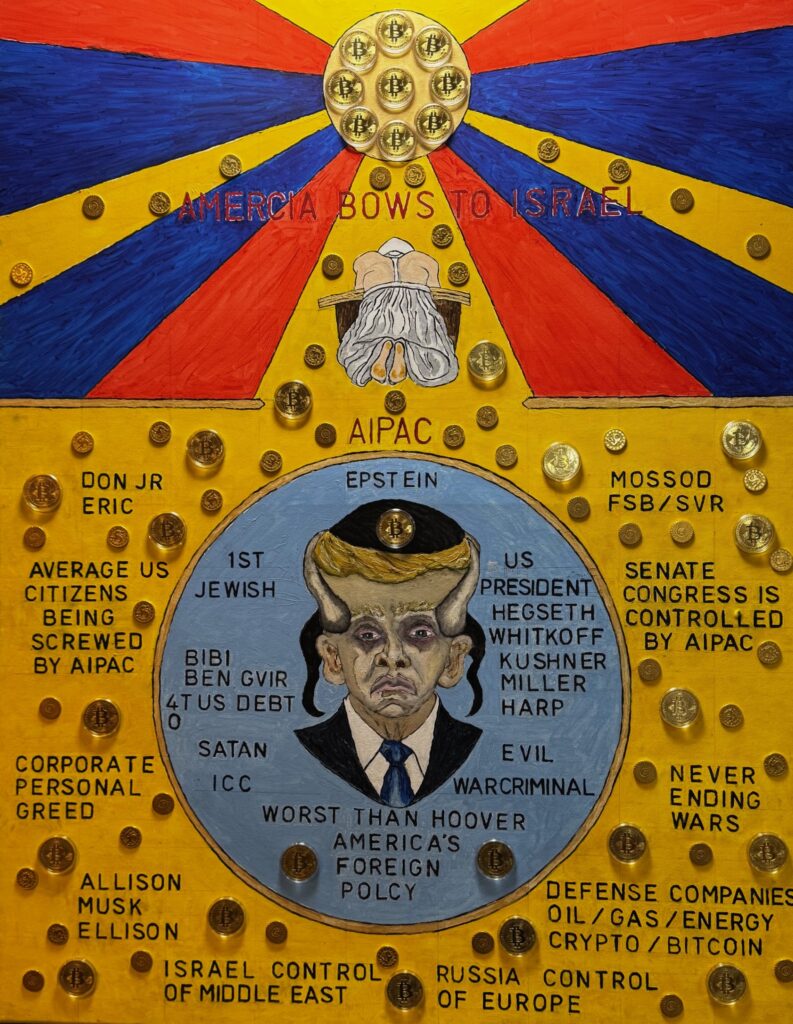
AMERICA BOWS TO ISRAEL?
Examining AIPAC, Lobbying, U.S. Foreign Policy, and Political Influence
Introduction
For decades, Americans have debated the influence that special interest groups, lobbying organizations, major donors, corporations, and advocacy networks exert over public policy in Washington, D.C. Few issues generate more discussion than the relationship between the United States and Israel, the role of the American Israel Public Affairs Committee (AIPAC), and the broader question of how money influences foreign policy decisions.
Supporters of the U.S.-Israel alliance view it as a vital strategic partnership that promotes regional security, intelligence cooperation, and shared democratic values. Critics argue that lobbying organizations and major campaign contributors have gained disproportionate influence over American foreign policy decisions.
Regardless of political affiliation, the discussion raises fundamental questions about transparency, accountability, and whose interests ultimately drive public policy.
What Is AIPAC?
The American Israel Public Affairs Committee (AIPAC) is one of the most influential advocacy organizations in Washington. Its mission is to strengthen the relationship between the United States and Israel through education, public policy engagement, and political advocacy.
AIPAC-affiliated programs, including those organized through the American Israel Education Foundation (AIEF), often provide educational opportunities and fact-finding trips for members of Congress and congressional staff.
Supporters argue these programs give lawmakers critical insight into regional security challenges and geopolitical issues. Critics contend they primarily present Israeli perspectives and may influence how policymakers approach Middle Eastern affairs.
The debate surrounding AIPAC reflects a larger national conversation about lobbying, campaign financing, and political influence across all sectors of government.
The Academic Debate Over Israel Lobbying
One of the most influential critiques of pro-Israel lobbying efforts came from political scientists John Mearsheimer of the University of Chicago and Stephen Walt of Harvard University.
Their book, The Israel Lobby and U.S. Foreign Policy, argues that organizations advocating for strong U.S.-Israel relations have played a significant role in shaping American foreign policy decisions.
The authors contend that lobbying networks can influence public discourse, political campaigns, and policy outcomes beyond what many citizens realize.
Proponents of the U.S.-Israel relationship reject these conclusions, arguing that American support for Israel stems primarily from shared strategic interests, democratic values, intelligence cooperation, and longstanding diplomatic ties.
The disagreement has helped fuel one of the most enduring foreign-policy debates of the modern era.
Campaign Contributions and Political Influence
Political money remains one of the most controversial aspects of American democracy.
Every election cycle, billions of dollars flow through:
- Political Action Committees (PACs)
- Super PACs
- Advocacy organizations
- Corporate lobbying groups
- Labor unions
- Trade associations
- Individual donors
Critics argue that excessive campaign spending creates a system in which elected officials become increasingly responsive to major donors.
Supporters counter that political contributions are protected forms of political expression under the First Amendment and are subject to disclosure requirements and campaign finance laws.
The underlying concern remains consistent:
Are elected officials primarily accountable to voters, or to the organizations capable of investing millions in election campaigns?
The Role of Billion-Dollar Donors
Large political donations have become increasingly common in modern elections.
Among the most widely reported contributors in recent election cycles:
Miriam Adelson
Casino owner and philanthropist Miriam Adelson reportedly contributed approximately $100 million in support of Donald Trump’s 2024 campaign efforts and affiliated political organizations.
Her support reflected strong backing for policies favorable to Israel and U.S.-Israel strategic cooperation.
Elon Musk
According to multiple reports, Elon Musk contributed more than $250 million toward efforts supporting Republican candidates and President Trump.
The scale of such contributions has reignited debate over whether major financial donors wield disproportionate influence over public policy.
Energy Companies and Wartime Profits
Historically, geopolitical instability in the Middle East has had a significant impact on global energy markets.
When conflicts disrupt oil production or transportation routes, prices often rise for:
- Crude oil
- Gasoline
- Diesel fuel
- Jet fuel
- Heating oil
- Liquefied petroleum gas (LPG)
- Agricultural fertilizer
As prices climb, large energy companies frequently see substantial increases in revenue and profitability.
Reported Oil Industry Profits
Recent earnings reports cited by market analysts have highlighted significant profits among major energy producers:
| Company | Reported Profit |
| Chevron | Approximately $12 Billion |
| ExxonMobil | Approximately $14.5 Billion |
| Major Global Energy Firms Combined | Tens of billions per quarter |
Critics argue consumers absorb the financial burden through higher fuel and transportation costs.
Supporters respond that energy prices are driven by market conditions, global supply, and geopolitical events rather than deliberate corporate actions.
The $1 Billion Energy Fundraising Controversy
One of the most widely discussed political fundraising stories involved reports that Donald Trump met with oil and gas executives at Mar-a-Lago during the 2024 campaign.
According to reports, attendees were encouraged to support a fundraising effort targeting approximately $1 billion in political contributions.
Critics viewed the meeting as evidence of special-interest influence.
Supporters argued that industry leaders routinely engage with political candidates and advocate for policies affecting their businesses.
Regardless of perspective, the event became a high-profile example of concerns about money and access in American politics.
Defense Contractors and the Business of National Security
International conflicts frequently lead to increased defense spending.
As governments replenish military stockpiles and invest in security infrastructure, defense contractors often experience significant financial gains.
Major defense companies include:
- Lockheed Martin
- RTX (Raytheon)
- Northrop Grumman
- Boeing Defense
- General Dynamics
- L3Harris Technologies
Critics argue rising military expenditures can create incentives favoring military solutions to international disputes.
Supporters maintain that robust defense spending remains essential to national security and global stability.
Regardless of political viewpoint, military conflicts often produce substantial economic benefits for defense manufacturers.
Jared Kushner, Affinity Partners, and Conflict-of-Interest Questions
Former White House advisor Jared Kushner has remained the subject of ongoing discussion regarding business relationships and foreign investments.
Particular attention has focused on:
- Affinity Partners
- Middle Eastern investment funds
- International business activities
- Post-government financial ventures
Critics question whether relationships developed while in public service could create perceived conflicts of interest.
Supporters note that no court has found criminal wrongdoing and that former government officials commonly engage in private business following public service.
The controversy highlights a broader concern about the intersection of political influence and private financial opportunity.
Cryptocurrency and Presidential Financial Disclosures
Cryptocurrency has emerged as another major source of political controversy.
Recent financial disclosure discussions have focused on reported crypto-related revenues associated with licensing agreements and digital asset ventures.
Figures frequently cited include:
| Revenue Source | Reported Amount |
| Licensing Agreements | $635 Million |
| Token Sales | $525 Million |
| Combined Total | More than $1 Billion |
Supporters argue these represent legitimate and disclosed business activities.
Critics contend that such financial interests raise important questions about transparency, regulation, and potential conflicts of interest.
The Growing Wealth of Political Insiders
Public scrutiny has also focused on reports of substantial wealth increases among prominent political figures and business leaders.
Reported Wealth Increases Since January 2025
| Individual | Estimated Increase |
| Elon Musk | +$500 Billion |
| Peter Thiel | +$20 Billion |
| Howard Lutnick | +$4 Billion |
| Donald Trump | +$4 Billion |
| Jared Kushner | +$400 Million |
| Steve Witkoff | +$300 Million |
| Eric Trump | +$360 Million |
| Donald Trump Jr. | +$300 Million |
| Barron Trump | +$150 Million |
Supporters argue these increases reflect investment appreciation and private-sector success.
Critics point to growing concerns about economic concentration and political influence among wealthy elites.
International Law, Sovereignty, and the ICC
The International Criminal Court (ICC) remains a source of tension between the United States and numerous international allies.
Supporters of the ICC argue it serves a vital role in enforcing international law and accountability.
Critics contend that sovereign nations should not be subject to external legal institutions beyond their own constitutional systems.
Recent disputes involving sanctions, investigations, and diplomatic disagreements have intensified these debates.
The controversy reflects broader questions about:
- International law
- National sovereignty
- Accountability for military actions
- Global governance
Why This Debate Matters
At its core, the conversation surrounding AIPAC, campaign finance, defense contractors, energy companies, cryptocurrency wealth, and foreign policy revolves around a single question:
Who Benefits From Government Decisions?
Americans across the political spectrum continue to ask:
- How much influence should lobbyists have?
- Do large donors receive special access?
- Should corporations have a major role in shaping public policy?
- Are elected officials accountable primarily to voters?
- How can transparency be improved?
These concerns are not unique to any single party, lobby, company, or administration.
They represent longstanding challenges within democratic governance.
Conclusion
The intersection of lobbying, campaign finance, foreign policy, defense spending, corporate profits, and political power remains one of the most significant issues in modern American politics.
Whether examining:
- AIPAC’s influence in Washington
- $100 million political donations
- $250 million donor contributions
- $1 billion fundraising efforts
- $635 million licensing agreements
- $525 million token sales
- $12 billion and $14.5 billion quarterly energy profits
the central question remains unchanged:
How can democratic institutions ensure that public policy serves the interests of citizens while remaining transparent, accountable, and resistant to undue influence? As debates over foreign policy, lobbying, and political money continue, informed public discussion and rigorous fact-checking remain essential components of democratic accountability.