Apocalyptic Nukes: Understanding the Rising Threat of Global Nuclear Conflict
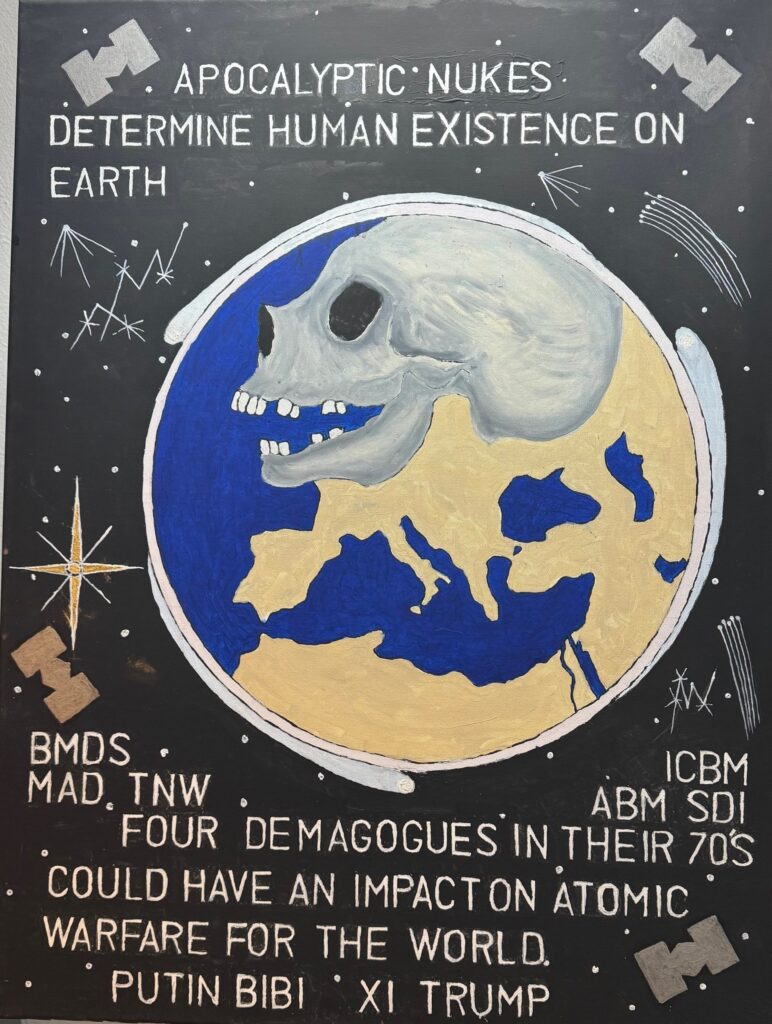
A Historical Warning Becomes a Modern Reality
The concept behind Apocalyptic Nukes traces back to the 1878 illustration by political cartoonist Thomas Nast, titled “The Internationalists Are to Make the World All One Millennium – Chaos.” Nast’s artwork—featuring a skull superimposed over the Earth with lightning striking from above—was a symbolic warning about global turmoil.
At the time, warfare was limited mostly to cannons and conventional weapons. Today, nearly 150 years later, the world faces a dramatically different reality:
Modern nations possess Intercontinental Ballistic Missiles (ICBMs) and Hypersonic Cruise Missiles (HCMs) capable of catastrophic destruction.
Countries actively developing or possessing hypersonic weapons include:
- United States
- Russia
- China
- India
- North Korea
- Japan
- France
These weapons dramatically shorten response times and increase the chances of accidental or rapid escalation.
Why the Nuclear Threat in 2026 Is Higher Than in the Post–WWII Era
After World War II, the devastation of Hiroshima and Nagasaki served as a harsh reminder of nuclear horror. But today, many have forgotten that reality, although modern nuclear weapons are over 100 times more destructive than those of 1945.
In an era where global power is increasingly shaped by strongmen and demagogues, a single miscalculation, error, or retaliatory strike could trigger catastrophic, worldwide consequences.
When leaders operate through fear, paranoia, or self‑preservation, the risk of unintended nuclear conflict increases dramatically. A single launch—intentional or accidental—could set off retaliation, creating a chain reaction that spirals into global atomic warfare.
Recent Escalation: Nuclear Threats Against Britain
Date: January 23, 2026
Source: Reporting by Will Stewart and Zahra Khaliq
During late‑night “peace talks” in Moscow between Vladimir Putin and Donald Trump’s envoys, Russian officials simultaneously issued open threats against Britain. As the Kremlin insisted it would not end the war in Ukraine unless Kyiv surrendered the Donbas region, Russian strategic bombers flew near NATO airspace, triggering emergency fighter escorts.
On state‑funded Russian television:
- Sergei Karaganov, a Kremlin adviser nicknamed “Professor Doomsday,” openly claimed that Britain could be subject to a “decapitating nuclear strike.”
- He asserted that Russia should “communicate clearly” that Britain could “simply cease to exist” if even a single foreign warhead were to reach Russian territory.
Such rhetoric—paired with military posturing—underscores how close modern superpowers stand to the brink of nuclear confrontation.
What Is Nuclear Winter?
Nuclear winter refers to a severe global cooling period caused by smoke and soot entering the stratosphere following widespread nuclear detonations and urban firestorms. According to major scientific models:
- Sunlight would be blocked for years
- Global temperatures could drop more than 5°C
- Crop failures would cause global famine
- Up to 5 billion people could die within two years
- 40–50% of animal species could go extinct
Even a regional conflict, such as a nuclear exchange between India and Pakistan, could lower temperatures enough to threaten 2 billion lives and wipe out 10–20% of global species.
These projections highlight how a nuclear conflict—even between smaller powers—has planetary consequences.
Pop Culture Reflection: Greenland 2 – Migration
Released in January 2026, Greenland 2: Migration presents a fictional yet chilling depiction of post‑nuclear‑winter survival. The film follows humanity’s desperate search for a protected “crater sanctuary” that can sustain life after atmospheric collapse.
While dramatized, the movie offers modern audiences a visceral look at the environmental, social, and psychological aftermath that scientists say would follow a real nuclear winter.
Conclusion: Truth Must Trump Lies
The global nuclear threat is no longer a relic of the Cold War.
It is a present-day, rapidly evolving reality.
With modern hypersonic weapons, aggressive geopolitical posturing, and world leaders willing to gamble with global stability, humanity stands at a crossroads. Recognizing the danger—not ignoring it—is the first step toward prevention.